
lämna ett meddelande
Om du är intresserad av våra produkter och vill veta mer, vänligen lämna ett meddelande här, vi svarar dig så snart vi kan.


As a mainstream technical solution for pipeline freeze protection and process medium temperature maintenance, electric heat tracing cables have been widely used in petrochemical, power metallurgy, municipal water supply and drainage, fire sprinkler and other industrial scenarios. However, many users lack systematic understanding of the heating principle, product classification and installation specifications of electric heat tracing, leading to many common misconceptions in selection and application. These may cause high energy consumption and unsatisfactory effect in mild cases, and bring safety risks in severe cases. The following summarizes five typical cognitive misconceptions in the industry to help more reasonable application of electric heat tracing systems.
Misconception 1: Electric heat tracing cables consume high power and have much higher operating costs than traditional insulation
Misunderstanding: Many users believe that electric heat tracing cables need continuous power-on heating, with large power consumption, and the long-term operating cost is much higher than traditional insulation or steam tracing.
Correct explanation: The actual operating energy consumption of electric heat tracing systems is directly related to the matching degree of working conditions, and it does not operate at full power continuously. Modern electric heat tracing systems are generally equipped with temperature controllers, which start heating only when the medium temperature is lower than the set threshold and stop automatically when the target temperature is reached. Among them, self-regulating heating cables also have PTC power self-regulation characteristics: the lower the ambient temperature, the higher the output power; the power automatically attenuates when the temperature rises, and it can limit the maximum temperature without additional temperature control.
According to actual operation data, a reasonably selected and standard-installed electric heat tracing system usually operates for 30%-50% of the whole day in winter, and the comprehensive energy consumption is more than 30% lower than that of steam tracing. Besides, there is no leakage loss and condensate recovery cost of steam tracing, so the life cycle operating cost is lower.
Misconception 2: Electric heat tracing cables are only suitable for winter freeze protection in cold northern regions
Misunderstanding: Many people think that electric heat tracing is only used in severe cold areas in the north, and it is not needed in southern regions with high temperature.
Correct explanation: The core function of electric heat tracing is to maintain stable target temperature, and its application scenarios are far more than winter freeze protection. In the humid and cold winter in the south, it can be used for anti-condensation of instrument pipelines, freeze protection of fire pipelines, and roof gutter snow melting. In industrial production scenarios, it can be used for constant temperature transportation of chemical fluid media, heat preservation of food processing pipelines, anti-solidification of sludge pipelines, and heat tracing of instrument impulse pipes to ensure stable process parameters.
Even in subtropical regions, some temperature-sensitive media and intermittently operated pipelines also need electric heat tracing to maintain the lower temperature limit, so as to avoid crystallization, solidification or increased viscosity affecting transportation.
Misconception 3: Electric heat tracing systems are complex to install and difficult for later maintenance
Misunderstanding: Some users believe that electric heat tracing is an electrical system with complex installation procedures, difficult troubleshooting in the later stage, and requires long-term maintenance by professional teams.
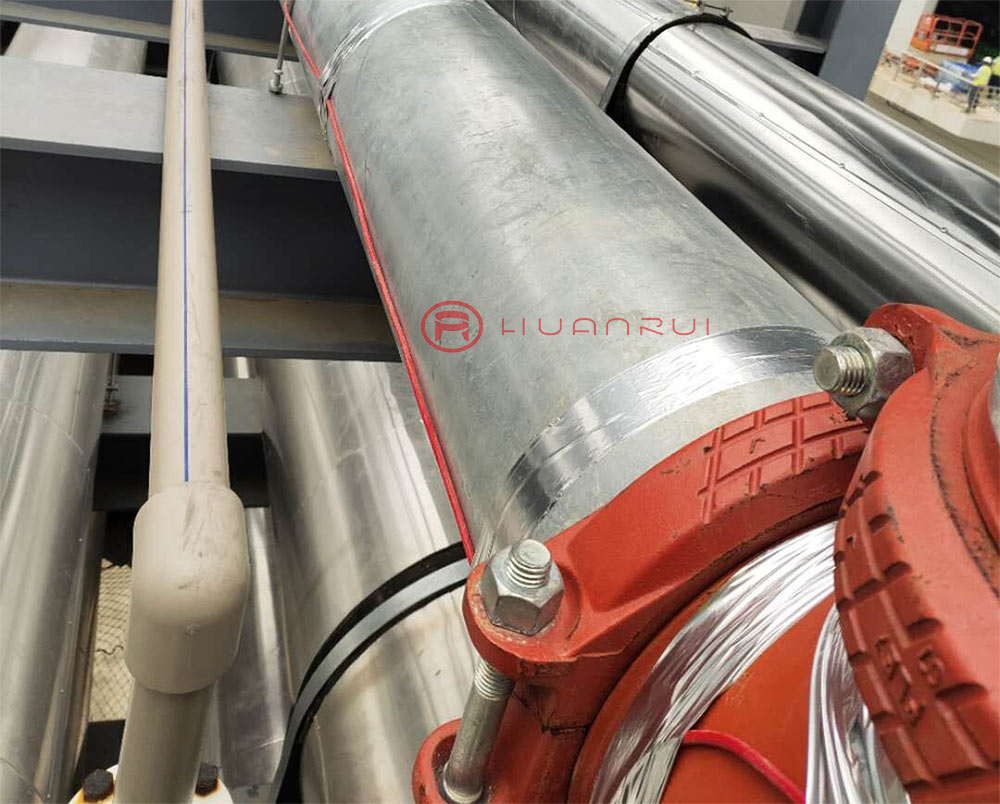
Correct explanation: The installation of electric heat tracing systems has formed a standardized construction process. It only needs to lay the heating cables along the outer wall of the pipeline, match with fixing tape and aluminum foil tape to enhance heat transfer, and cover the outer layer with thermal insulation layer, without modifying the original process pipeline. For special-shaped parts such as valves and flanges, it can also be flexibly laid by winding, tiling and other methods.
In normal application scenarios, qualified electric heat tracing cable products have waterproof, corrosion-resistant and explosion-proof characteristics, with no moving wearing parts, and almost no daily maintenance after put into operation. Projects equipped with intelligent monitoring systems can also realize remote temperature monitoring and fault circuit location, greatly reducing operation and maintenance difficulty.
Misconception 4: All electric heat tracing cables can be cut at will and laid in overlapping winding
Misunderstanding: Some on-site construction personnel think that electric heat tracing cables can be cut to any length like ordinary wires, or laid in overlapping winding to enhance heating.
Correct explanation: Whether electric heat tracing cables can be cut and overlapped depends on the product type.
In terms of cutting: Constant-wattage heating cables are designed with fixed length and uniform heating power. Random cutting will change the resistance and power, and even cause local overheating, so they cannot be cut on site. Self-regulating heating cables support on-demand cutting on site, but they also need to strictly follow the maximum single circuit length specified by the manufacturer to avoid overload.
In terms of overlapping: Constant-wattage heating cables and mineral insulated heating cables have constant heating power. Overlapping and crossing will cause heat accumulation and local overheating, accelerating insulation layer aging, so overlapping and crossing laying is strictly prohibited. Self-regulating heating cables have PTC self-limiting temperature characteristics. When the temperature at the overlapping part rises, the power automatically attenuates, and there will be no overheating out of control. According to the HG/T 20514-2014 industry standard, self-regulating heating cables can be cross-laid, which is commonly used for heat supplementation of special-shaped fittings such as valves, flanges and tees in engineering. However, multi-layer dense overlapping is still not recommended to avoid unnecessary energy consumption and insulation loss.
Misconception 5: Electric heat tracing cables are electric heating products with great safety risks
Misunderstanding: Some users worry that electric heat tracing cables operate with electricity, which is prone to safety problems such as electric leakage, short circuit, overheating and fire, and they dare not use them especially in chemical explosion-proof areas.
Correct explanation: Industrial-grade electric heat tracing cables produced by regular manufacturers meet relevant safety standards from product design to production. Basic products have double insulation and grounding shielding structures, and supporting leakage protection devices can effectively avoid electric leakage risks. Explosion-proof electric heat tracing products have passed ATEX and domestic explosion-proof certifications and can be used safely in explosive gas environments.
At the same time, the electric heat tracing system can be configured with multiple protection mechanisms such as overheating protection and temperature limit control. As long as the selection, installation and use are strictly in accordance with specifications, the safety risk is controllable. The core of safety problems is often not the product itself, but non-standard product selection, non-standard construction and lack of protection devices.
Conclusion
After years of development, electric heat tracing technology has been very mature. Its application effect and service life largely depend on accurate cognition, reasonable selection and standard construction. Breaking through common cognitive misconceptions, scientific selection combined with working conditions, and standardized design and installation can give full play to the advantages of energy saving, safety and stability of electric heat tracing systems, and ensure long-term stable operation of industrial pipelines and equipment.
 IPv6-nätverk som stöds





lämna ett meddelande
Skanna till Wechat :
Skanna till WhatsApp :